
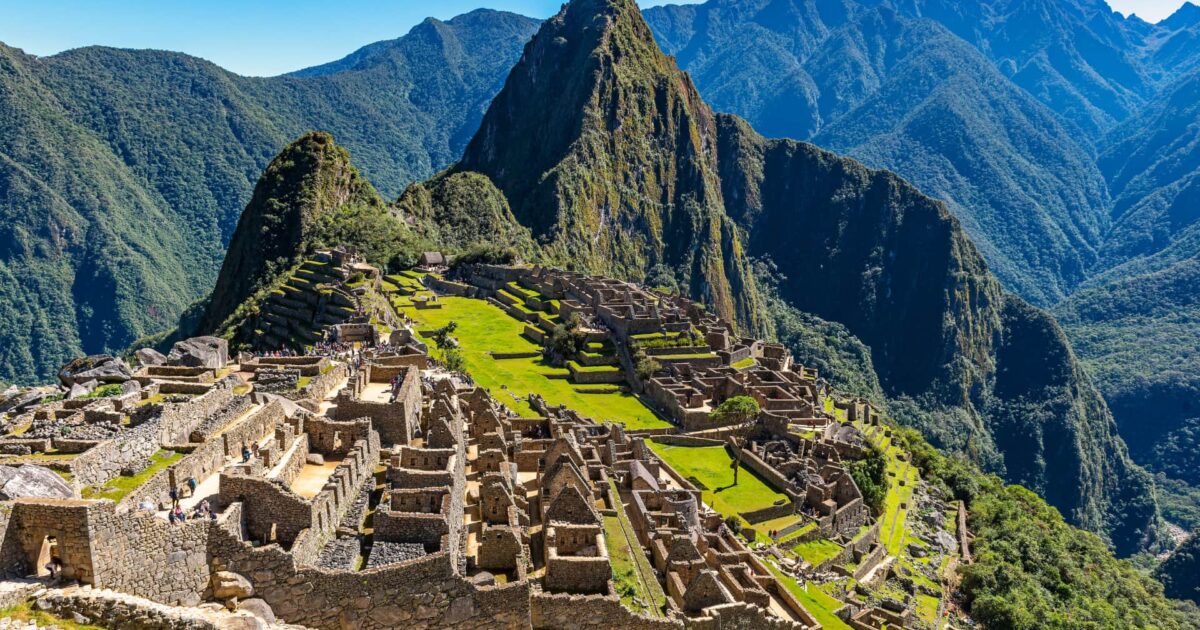
Machu Picchu is the dream destination of any trip to Peru, but you cannot get there in a straight line: there is no direct road from Cusco to the citadel. Every route ends in Aguas Calientes (Machu Picchu Town), the village at the foot of the mountain, or at the citadel itself if you arrive on foot via the Inca Trail. In this guide we explain how to get to Machu Picchu from Cusco depending on your time, budget and travel style.
Summary: what is the best way to get there?
- If you want comfort: train from Ollantaytambo (Sacred Valley) or from Cusco.
- If you want to walk the original Inca route: the 4-day Inca Trail or its short 2-day version.
- If you love high-mountain adventure: the Salkantay trek or the Inca Jungle.
- If you are on a tight budget: the Hidroeléctrica route.
1. By train: the most comfortable option
The train is the most popular way and the one we recommend to most travelers. It runs through the Urubamba river canyon among mountains, cloud forest and views of snow-capped peaks, and drops you at Aguas Calientes station.
From Ollantaytambo (Sacred Valley)
This is the departure point with the most schedules. The ride takes between 1 h 30 and 2 h. Ideally, spend the previous day exploring the Sacred Valley (Pisac, Urubamba and Ollantaytambo) and take the train in the afternoon or the following morning. The Valley is also lower than Cusco, which helps you acclimatize.
From Cusco (Poroy station or bimodal service)
There are also departures from the outskirts of Cusco, with a journey of about 3 h 30. During the rainy season the service often runs as bimodal: one leg by bus between Cusco and Ollantaytambo and another by train to Aguas Calientes. Always confirm the type of service when booking.
Types of train
The companies operating the route offer different categories: basic or expedition trains (the cheapest), panoramic trains with ceiling windows and luxury services with onboard dining. The difference is comfort, views and service, not travel time.
2. On foot via the Inca Trail
The classic Inca Trail (about 42 km over 4 days and 3 nights) is one of the most famous hikes in the world: it crosses archaeological sites, cloud forest and Dead Woman’s Pass (4,215 m / 13,829 ft) before entering Machu Picchu through the Sun Gate (Inti Punku). It requires permits with limited spaces that usually sell out months in advance, and the trail closes every February for maintenance.
If you have less time, the short Inca Trail (2 days and 1 night, about 12 km) passes Wiñay Wayna and also arrives through the Sun Gate.
We can help you with both: Inca Trail 4 days / 3 nights and Inca Trail Express 2 days / 1 night.
3. Alternative treks: Salkantay and Inca Jungle
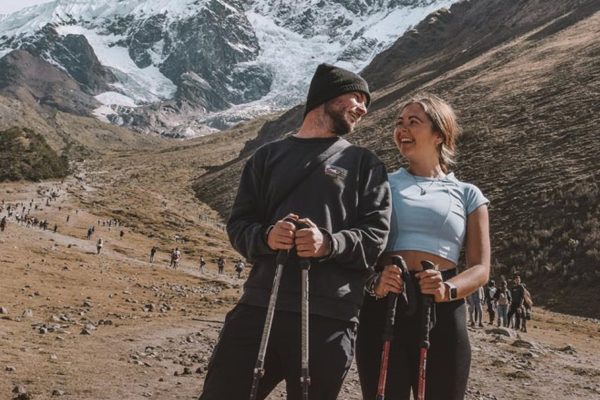
If you could not get Inca Trail permits or prefer a less crowded route, the Salkantay trek crosses a mountain pass at 4,630 m (15,190 ft) next to the snow-capped peak of the same name, with high-mountain and cloud forest scenery, and requires no special permits. The Inca Jungle combines downhill biking, hiking and optional activities in the Santa Teresa jungle before reaching Aguas Calientes.
Recommended options: Salkantay Trek 5D/4N + Llactapata and Inca Jungle 4D/3N.
4. Via Hidroeléctrica: the budget route
This means traveling by road from Cusco to the Hidroeléctrica power station (about 6 to 7 hours, via Santa María and Santa Teresa) and then walking 2 h 30 to 3 h along the railway to Aguas Calientes. It is the cheapest option, but also the longest and most tiring: it requires good fitness and is best avoided if you are short on time.
From Aguas Calientes to the citadel
From Aguas Calientes there are two ways up: the official bus, about 25 to 30 minutes along the Hiram Bingham road with departures from very early, or on foot, up a steep stone staircase of roughly 1 h 30. Most travelers take the bus to arrive with energy for the guided visit.
Machu Picchu tickets: what you need to know
- Entry is organized by circuits with an assigned entry time.
- Daily capacity is limited: from June to August, and on holidays, tickets sell out weeks in advance.
- Huayna Picchu and Machu Picchu Mountain have their own quotas and are booked together with the entrance ticket.
- Bring your original passport, the same one used to buy the ticket.
How many days do I need?
Technically you can go and come back from Cusco in one day, but it is a very long journey. We recommend at least 2 days, with a night in Aguas Calientes and, if it is your first trip to Cusco, 4 to 5 days to add the City Tour, the Sacred Valley and time to acclimatize. Check our programs Cusco and Machu Picchu in 4 days and Cusco and Machu Picchu in 5 days, or get inspired by our 5-day Cusco itinerary.
Tips for your visit
- Arrive in Cusco with at least one spare day to acclimatize: Cusco sits at 3,399 m (11,152 ft) and Machu Picchu at 2,430 m (7,972 ft).
- December to March is the rainy season: pack a rain poncho and shoes with good grip.
- Use sunscreen, a cap and insect repellent: the sun is strong at the citadel and there are mosquitoes in Aguas Calientes.
- Travel with a small backpack: large luggage is not allowed inside the citadel.
Frequently asked questions
Can you drive to Machu Picchu?
Not to the citadel. By road you can only reach Hidroeléctrica; from there you have to walk or take the local train to Aguas Calientes.
What is the fastest way?
The train from Ollantaytambo: between 1 h 30 and 2 h to Aguas Calientes, plus 25 to 30 minutes by bus to the citadel entrance.
Do I need a guide to enter?
Yes. Entry to the citadel is made with an official licensed guide, who also helps you understand the history of each sector.
Want us to plan your trip?
At Kuntur Spirit we handle trains, tickets, buses and guides so you only have to enjoy. Message us on WhatsApp and a specialist will design your route to Machu Picchu around you.